Architectural Integrity & Philip Stott's Legacy
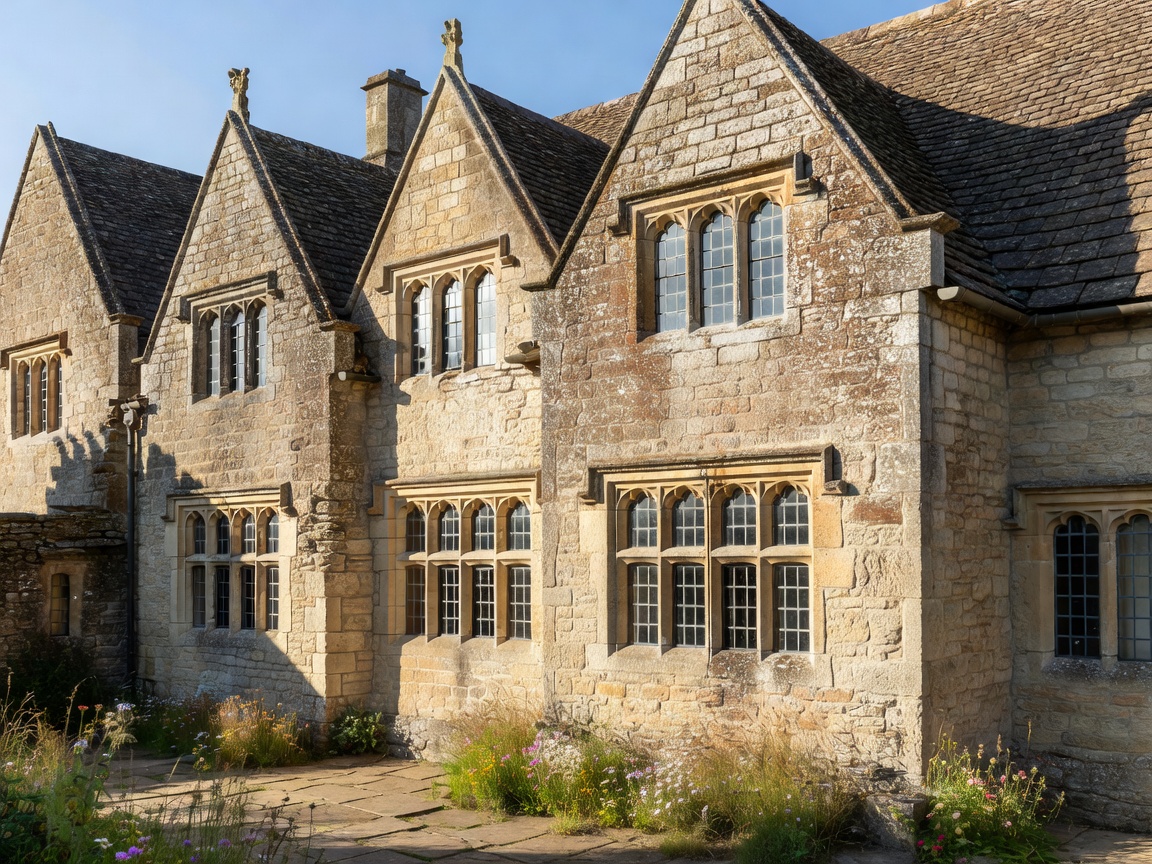
Stanton rests roughly four miles southwest of Broadway in Gloucestershire. Unlike communities situated alongside major trunk roads, the settlement forms a cul-de-sac running east towards the rise of Shenberrow Hill. The visual unity of Stanton is primarily due to restorative work carried out in the early twentieth century by architect Sir Philip Stott, who purchased the manor estate in 1906 and systematically repaired the 16th- and 17th-century vernacular limestone dwellings without introducing anachronistic Victorian ornamentation.
Walking through the village core reveals quintessential Cotswold stone slates (stone tiles quarried locally and graduated by size from eaves to ridge), steep roof pitches, four-centred arch doorways, and drip moulds over stone mullioned windows. Overhead telegraph cables were placed underground decades ago, leaving clean streetscapes uninterrupted by modern utility infrastructure.
Field Walk: Stanton to Stanway via the Escarpment
One of the most rewarding circular routes begins at the village cricket pitch, skirts the base of Shenberrow Hill, and enters the neighbouring estate of Stanway:
- Distance: 4.8 miles (circular)
- Elevation Variance: 410 ft ascent along the woodland terrace
- Footpath Terrain: Grassy field edges, ancient bridleways, and stony lanes that can turn muddy following heavy winter rain
- Waymarking: Clearly signposted along sections of the Cotswold Way National Trail
From the top of the ridge, the vista opens westward across the Vale of Evesham toward the Malvern Hills. On clear autumn mornings, temperature inversions often leave the valley submerged in mist while the high pasture of Shenberrow remains bathed in clear light.
Comparative Overview: Stanton vs. Neighbouring Settlements
Understanding where Stanton fits within regional itineraries assists travellers in selecting routes aligned with their preferences for quietude and historic preservation.
| Location | Commercial Profile | Parking Capacity | Footpath Connectivity |
|---|---|---|---|
| Stanton | Single traditional pub (The Mount), no retail outlets | Very limited on-street; designated grass bay at village entrance | Direct links to Cotswold Way, Shenberrow Camp |
| Broadway | Extensive boutiques, hotels, galleries, tearooms | Multiple large pay-and-display car parks | Access to Broadway Tower and high plateau tracks |
| Stanway | Estate grounds, Jacobean water garden (seasonal opening) | Limited estate event parking only | Connects to Lidcombe Wood bridleway network |
Practical Travel & Preservation Guidance
Because Stanton remains an active residential and farming hamlet rather than an open-air museum, visitors should observe standard countryside courtesy:
- Vehicle Access: The narrow single lane makes coach transit impossible and passing difficult. Drivers should utilize the signposted layby on the western village approach rather than parking along residential verges.
- Equestrian Traffic: Stanton maintains an active livery yard; horses have right of way along the main high street and connecting holloways.
- Seasonality: Late spring (May) brings wisteria across the honey-toned masonry, while early November affords exceptional woodland canopy foliage along the scarp trails without summer foot traffic.